
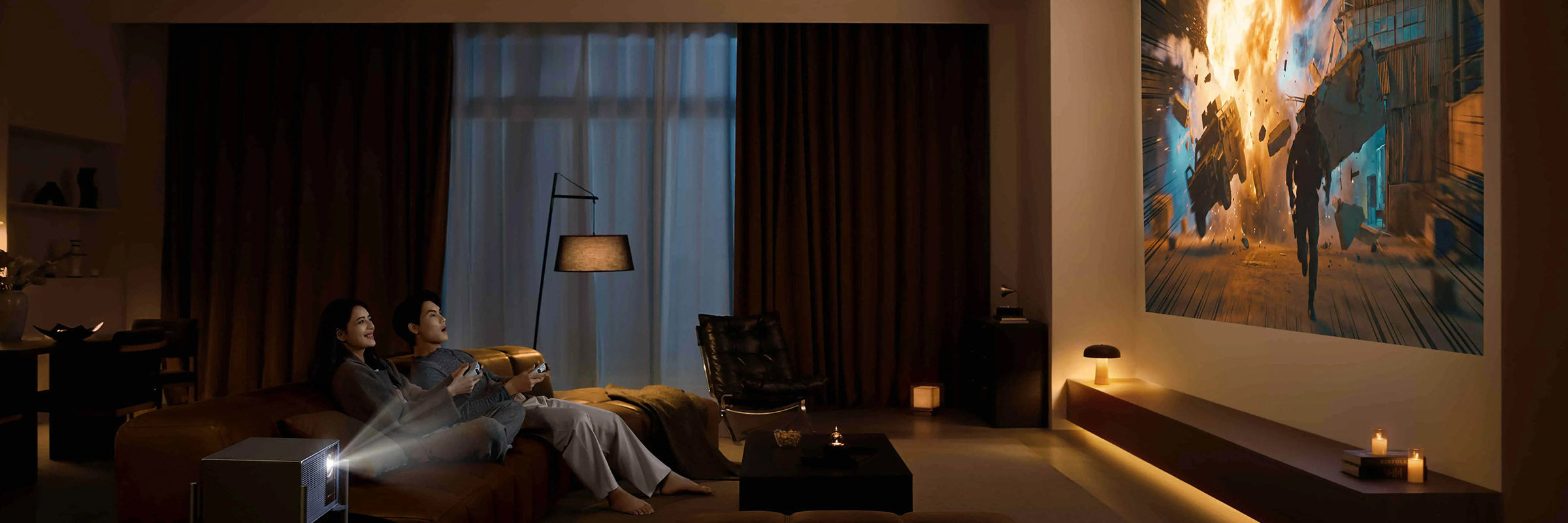
Frame interpolation creates smoother motion during playback on a high-end projector by inserting intermediate frames. The technology uses a similar trick to the interlacing used in classic television. There, however, each frame was split into two fields to double the frame rate. With frame interpolation, by contrast, additional image information is generated and then inserted between two consecutive frames. This motion interpolation doesn't aim to improve the image itself, but smooths fast movements that the camera has broken down into sequences of frames.
Frame interpolation takes place entirely in the playback device. It is therefore possible with any video material, provided the output device has enough processing power to carry out the calculation, which has to happen in real time. Because of this independence, the different motion interpolation methods developed by various high-end projector manufacturers can coexist without any problems. Examples of such image enhancement technologies are AcuMotion, Intelligent Frame Creation, TruMotion and Motionflow.
